
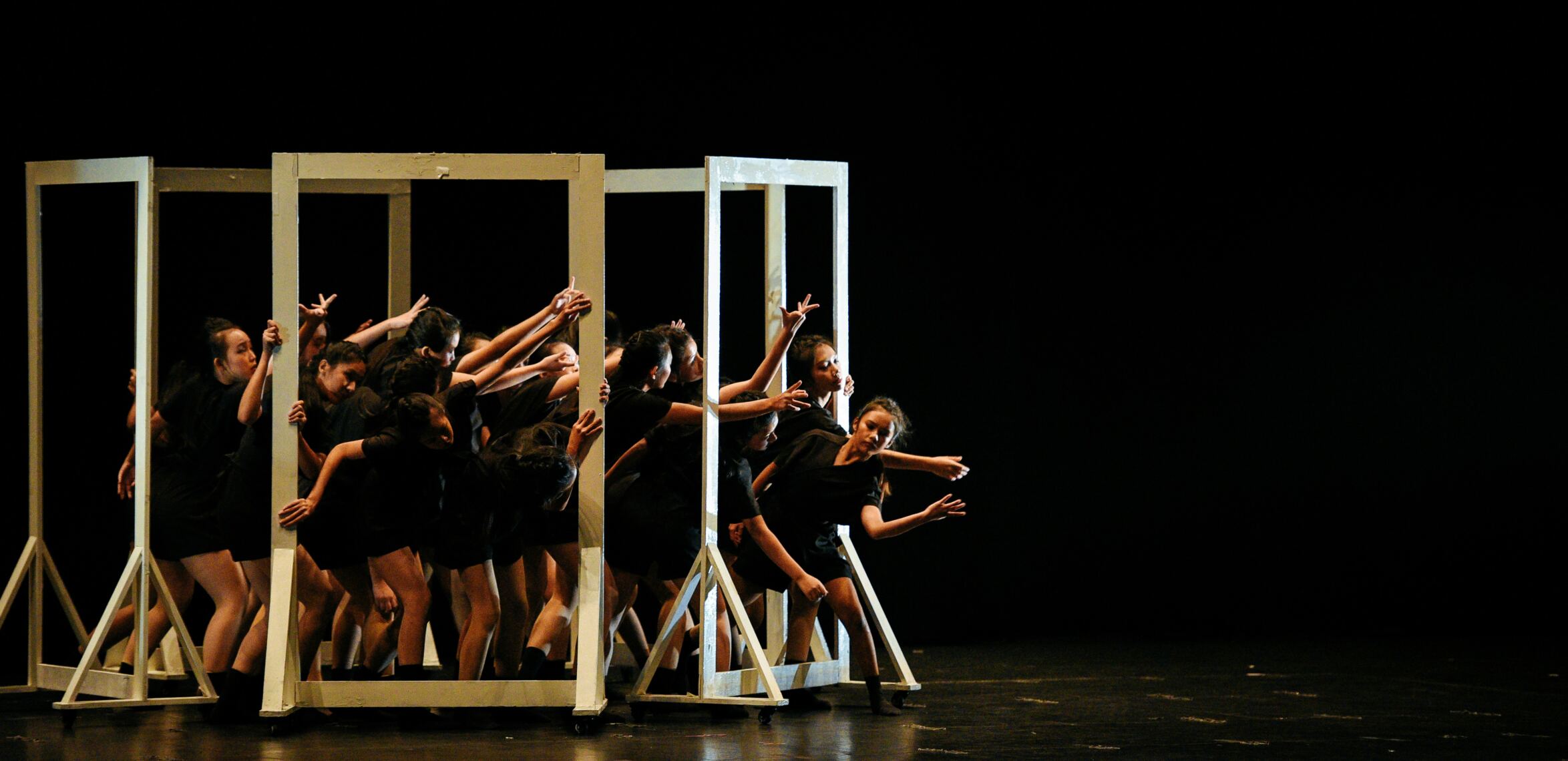
A transcribed interview with Becci Parsons – Feldenkrais® practitioner and Dance Educator
Joe Webster: Hi everyone, welcome to a new SenseAbility podcast written edition. My guest today is Becci Parsons. She’s a Feldenkrais practitioner that has been practicing for 30 years.
Becci Parsons: A little longer. I started teaching my first class in 1989. That was the second year of my training. My training was ’88 to ’91. So, I’ve been at it. It’s longer than some people have been alive!
Joe Webster: And your background includes—I don’t know if it came before this stuff—but you’ve been heavily involved in working in education in the field of dance. Teaching, I assume, teaching dance and the Feldenkrais Method® of somatic education?
Becci Parsons: Well, I’ve never been a technique teacher. I had my own dance injury many years ago that brought me to Feldenkrais, and brought me specifically to Jeff Haller, because I’m in Seattle where Jeff is also living. So that was the diversion in my path. I thought that I was going to get a bachelor’s degree, a master’s degree, and then I would teach in a dance program. I would choreograph on dancers, and that was going to be my joy.
Instead, I got a little detour with a knee injury, so my joy became Feldenkrais. I think it’s interesting that I still ended up teaching in a college dance program, but not teaching what I thought I was going to teach.
Joe Webster: Did you still head in the direction of choreography?
Becci Parsons: You know, not really. Although, what is an Awareness Through Movement® lesson?
Joe Webster: I mean, you tell me?!
Becci Parsons: I know! If I’m teaching a lesson without a transcript, or even if I’m teaching with a transcript, I can look at what’s on the page or what’s on the screen and go, “No, no, no, we’re going to do that differently. We’re going to do this part before that part.” So, I think I choreograph every day. It’s just not so much put on a proscenium.
Joe Webster: Yeah, okay. So, from 1996 to 2019, you were doing that as part of an academic process, teaching dance students some of these skills. In a very broad sense, what would you say that you learned during that time?
Becci Parsons: So much! I don’t have children and I didn’t appreciate just how much I would love having young folks in my life. As crazy as 18 to 22-year-olds can be, I really miss them. I miss their anxiety, their determination to pursue life through art and I miss watching them discover things for the first time.
The great thing is, I’m still friends with many of the students that I taught. They are still working and teaching in Seattle. So they’ll say, “Come see my show,” and I will.
Joe Webster: Do they come to your Awareness Through Movement lessons still?
Becci Parsons: I still have some that do! Easy with online classes. And it’s great, in my private practice I’m getting more people from the tango community, and more from the social dance community as well. I find that so interesting because have I ever taken a tango class in my life? I have not! But because we pay attention to coordination—really, the how of moving—I can plug that in and people go, “Oh my gosh, my teachers never said this to me,” or “My teachers never noticed this.” So there’s a place for us in the broad view of dance.
Joe Webster: Was the institution that you worked in classical dance?
Becci Parsons: It was. Definitely ballet and modern dance were emphasized. Our students also learned to choreograph, improvise and collaborate with other artists. They had a strong foundation in teaching methods and eventually a Pilates instructor training program, all in service to having adjacent employment. The percentage of students who go from a college dance program to professional dance is small.
Joe Webster: So, of the students that you worked with over that time, and considering the Feldenkrais Method wasn’t very well known at that time, how was the interaction, and how did that maybe evolve over your teaching time? What changed as you developed and figured out how to apply it in different ways?
Becci Parsons: I was originally invited to co-teach a class called Alternative Training. It was 7 weeks of strength and conditioning addressing the specific needs of ballet and modern technique taught by a savvy dancer/Physical Therapist. Then came my 7 weeks of Feldenkrais Awareness Through Movement. I began with the basic Feldenkrais idea that one can only change what one perceives. My interest was in helping students develop an internal sense of “rightness’ about how they were moving. Becoming more process than goal oriented. Discovering more inroads to creativity and expressivity in the classroom or on stage without causing injury. In essence, dancing smarter, not harder.
Joe Webster: Yeah, I like that.
Becci Parsons: Our students were suspicious at first, but began to see the payoff, as did the technique teachers. We eventually integrated our seemingly disparate class into a truly team-taught endeavor. It became known as Movement Foundations, a required two semester class for first year dance majors.
With students coming in from so many different backgrounds, our experiential anatomy/technique lab/applied somatic discovery class helped everyone get on the same page. The technique teachers were delighted. In our slowed down laboratory setting, we could learn the anatomy of our hip joints, relate that specifically to dance movements, discover playfully, through an ATM lesson all the possibilities and then take it to the barre or floor into integrative practice.
On a three-year rotation I also had the opportunity to teach a 14 week introduction to Feldenkrais class open to dance majors, music and theater majors. It was an 8am class, so despite the giant triple lattes, they slept some, moved gently, had passionate discussions and wrote soulful journal entries. I think the students came in thinking, “What’s this?” expecting an easy, ‘do nothing’ class. They left surprised by the emotional impact. The Book on the Foot lessons had them laughing so hard and then during breathing lessons I’d have students on the floor weeping. A testament to the power of deep listening. It can be what happens when you’ve slowed down and allowed yourself to stop competing and achieving.
Joe Webster: For sure.
Joe Webster: Let’s say someone out there right now is considering enrolling on a dance training, or is at the beginning or even towards the end of a dance training, and they feel what you’ve described is very interesting and they would like some of it. What information or what nuggets of information could you give to that person initially that would help them find their own way with this stuff?
Becci Parsons: That’s a great question because so often, you graduate, and in an artistic discipline, the ideal is that you go to New York to perform and make a name for yourself. In my day, that meant that you had a job to pay the bills and that you spent every remaining waking hour taking class or rehearsing. In constant motion. A recipe for exhaustion and injury. What we offer can appear to be antithetical to the demands of professional dance and yet I would argue that we are advocating for balance. Developing the wisdom to make positive choices. A dance injury can be the end of a career or the beginning of a new one. Crisis or opportunity?
All dancers have experienced ‘show stopping injury’ at some point. Wise ones bring what they’ve learned to their teaching. But it’s hard. Unless you live in a vibrant dance community, I don’t think there’s a lot of post-graduate support. Some of my Cornish students began to show up to my public classes when they were no longer in Movement Foundations or after graduation. Those with chronic injuries came for private lessons and still do.
We have a MFA in Dance program at the University of Washington. Those students have had a career as a professional dancer, and now they want to teach in a college setting. This program gives them the credentials to do that. It’s an intense and time consuming program, but many of those dancers have come to my classes.
Joe Webster: And what are they learning there? Can you give us a flavor of it?
Becci Parsons: You know, I think each person would have something different to say. But for many dancers—and it depends on when you were trained as to how much improvisation you have done—if you’ve been on a very technical tract working in one style then repetition is all you know. And that’s one little slice of something. My sense is that a lot of those folks come because it is recuperative. They are immersed in this world of commanding themselves to dance for more than six hours a day, but a Feldenkrais class offers welcome contrast. It is a place for unfettered exploration that often begins on the floor with gravity as your friend.
Joe Webster: The way that you make it sound, it sounds like the thing that they’re learning is how to be in the experience of themselves in a way that feels good, rather than be within the experience of themselves with the anxiety of achievement present. Like, “I have to get this technique right because I’ve got this audition coming up.” It’s just like learning to inhabit the space of yourself in a way that feels nice.
Becci Parsons: Yes, and to be in both of those places. Isn’t it interesting? The person who hired me to teach at Cornish College was my ballet teacher, and she became the chair of the department there. One of my fondest memories of her—and it was striking to me, long before I’d ever experienced Feldenkrais—she would stand by the piano, because we had live accompaniment, and she would be just giving a combination that you’re doing at the barre. “Six of these, four of these, tendu, blah blah, point, relevé.” She would be standing there giving the instructions, looking out at a classroom of over 25 students. She would be talking at the same time, gesturing with her hands what your feet are going to be doing, but at the end, she would say, “and relevé,” which means to go up on one leg, and she would do that without holding on to anything.
She was modeling that in a funny way. She was doing that thing that performance does, which lets you be so internally focused, but not at the expense of being able to function. I would just marvel and think, “How is she talking, balancing, and demonstrating perfect technique all at the same time?” So that’s the paradox. That’s what dance really asks of us.
Joe Webster: That makes me wonder about conventional education and the way that they encourage the learning experience. It’s very different from the Feldenkrais model of creating learning. I wonder about the difference in skill level or the way that skills developed within those two different approaches?
Becci Parsons: So say more, are you speaking of how we could be better integrated into a traditional academic program?
Joe Webster: Yeah. How it seems to me is that often in conventional educational models, the approach to skill-building is repetitious. You just have to do it again and again and again until you magically get the technique. Whereas the Feldenkrais approach to learning comes at that from a very different angle, and it’s about building the resources of choice in the system so that you can understand how you get to the technique. You can feel it; there’s a progression to it.
Becci Parsons: Well, and I think what we do really well, built into our classes, is constant self-reflection. We’re giving this verbal instruction for where your arms need to go and what’s happening, but we’re also really offering detailed sensory information. I’m careful about that because some people will say, “You said to feel this and I didn’t.” I say, “I’m not telling you what to feel, I’m saying there’s this broad field of possibility.” But I think that academic learning typically, or at least my experience of it, had very little self-reflection in it. In Awareness Through Movement, we’re reflecting and then going to the next thing, reflecting and taking that into the next movement. So there’s a way that we’re modeling presence.
Joe Webster: I assume you mean somatic self-reflection?
Becci Parsons: Yes. Yes.
Joe Webster: Just to make the distinction between that and intellectual self-reflection.
Becci Parsons: And yet, you know what I did when I was teaching the straight-ahead, traditional Feldenkrais class? I thought, “How am I going to grade them?” because I have to give them a grade. Attendance is part of that. Class participation is part of that. But I also decided, let’s have a journal. For each class, they just have to write a little something. It didn’t have to be the instructions of the lesson; it could be what were the images that came, how did you take this with you through the rest of your day? That kind of thing. I think that’s a really interesting and rich place to take academic learning and to just reflect on it intellectually as well as somatically.
Joe Webster: Where my mind goes from that is that you’re encouraging them to take care of their process, and that that is a transferable skill to them learning how to take care of themselves.
Becci Parsons: Especially when you’re 20 years old! Right? Some of us don’t come with that packaging.
Joe Webster: I imagine anyone that’s got into professional dance or is wanting to, you’ve come through a route that is competitive and is pressured.
Becci Parsons: It’s the nature of the beast, or was. Maybe it’s changing. I was just going to say that for any other potential educators out there, be careful when you ask people to write journals because then you have to grade them. You have to look at all of them. So I did that for a couple of years and I thought, “Huh, whose idea was this?” It’s a lot of reading, it’s a lot of work outside of your class. But on some level I loved it too. I loved the idea of a journal and that some people wrote very personal things, because journaling is that—journaling is bringing your body onto the page in a way.
Joe Webster: And I guess it’s encouraging humanization in the process rather than objectification.
Becci Parsons: Yes. And I think being articulate—people think, “Oh, dancers are a self-selecting group, they’re not academically inclined, and that’s why they’ve chosen dance.” That’s really not true. Many of our Cornish students went on to become physical therapists and doctors and other professionals if they left professional dance behind. Movers bring a different perspective to any setting. We are welcomed as ‘outside the box’ thinkers.
Joe Webster: So then, I’m curious about where you’re at now in terms of your teaching, what you’re doing with the foundations that you built in yourself, and how you’ve taken that out into the world post the academic period?
Becci Parsons: Teaching at Cornish was something I did alongside my public classes and private practice. The academic setting was in addition to my established professional life. I really wouldn’t trade it for anything; I’m so grateful to have had it. It was an incredible laboratory. It was as if someone said, “Would you like to have this laboratory and create something from nothing?” and the answer was yes. Yes, I would do that. Creating something from nothing is what we do when we make a dance. I’m in.
I suppose I’m still making dances in a way. Most of my current students in public classes are in their 60’s and 70’s. Some have been with me since my first offerings as a second year student. Many are ‘bionic’ meaning they’ve had joint replacement or they may have osteoporosis or other health challenges to be mindful of. I have to think more explicitly about providing options for modifying the lessons I teach, especially since my classes are online and not in person.
I agree with Feldenkrais who said that learning should be fun. I want my classes to be light hearted and interesting in a deep, creative way. I’ll sometimes end with a homework assignment that’s a prompt about where did this class take you in yourself? Was this novel? Is this a place that you enjoy? Can you find your way back to it, and how would you bring that into the dance of your life?
Joe Webster: What comes through to me there is, in terms of your teaching to the public now, there’s a sense that you’ve had time to hone your craft.
Becci Parsons: More than a minute!
Joe Webster: Yeah, yeah. And I think that that is only beneficial to the people that you’re working with, right? That you’ve been in that process of refining the way that you teach, the way that you relate, the way that you give instruction. That’s a developing, improving skill, as well as just the content of the lessons.
Becci Parsons: Right. And I’m an improviser. I’m probably a little more comfortable—maybe some would say I’m too comfortable—with improvisation because I can relate movements that seem disparate. I could make a strong argument for why this is connected to that. So, I’m that teacher who, when I see something really going south in my classroom, I’m no longer going, “Oh my gosh, oh my gosh.” I just go, “Oh, I can see what’s missing for this person. We’re going to go back to a lesson that’s in this family and do a little bit of this to see if we can get this person or these two people on the same page.” I love that. That’s not scary to me anymore.
Joe Webster: I think that’s what Moshe did as he taught, right? There’s like one lesson that he’s taught in 12 different ways, and it’s dependent on what he’s observing.
Becci Parsons: You bet.
Joe Webster: Where my mind goes from that is that we all encounter challenge, right? Whether that’s in your professional working life, or in your personal life, or in your movement practice, or driving down the road. We all encounter challenge. Can you say what your approach to that is within the context of a Feldenkrais lesson that maybe can be spread wider into a more general context?
Becci Parsons: I think I probably do what all of us teachers do, which is recognize that someone has encountered an obstacle, and really use the lesson itself to help us go towards the obstacle gently. Engage it at a safe distance. Be beside it. Honor it. Rest with it. Observe without judging when possible. Maybe an obstacle is an invitation to pause.
It allows the person to have their private relationship with it, but also to look at an obstacle as not necessarily a “no.” Or if it is a no, can you still be curious? All of those things that are embedded in our work and in the lessons that we teach.
Joe Webster: A large part of the Feldenkrais process in terms of the lessons can be related to the developmental process with children. Children are encountering that frustration and challenge at every step! It’s just part of the process. If you’re learning how to balance, you’re going to be falling over.
Becci Parsons: Expect it! And learn how to land. You think about those headstand lessons that are often taught in the second year of a training program. I thought it was brilliant. I could easily do a headstand back in those days, I was 30 years old, I could do a lot of tricks back in those days! I loved that it was not very far into those lessons that I went, “Ah! He’s teaching us how to fall. This is brilliant!” So yeah, you got to know how to fall and you got to know how to land. You know this as a martial artist. You’re going to fall. In fact, you’re going to throw yourself in the air depending on what kind of martial arts you study.
Joe Webster: Yeah. Great. Well, I feel like this has come to a natural conclusion for me. I don’t know, do you have anything else that you would want to share with people?
Becci Parsons: No, I’d say what’s so great about this world is that anyone can join me online. You don’t have to come to Seattle; you can come to Seattle via Zoom! So I welcome anybody to come and try my classes. It may not be exactly what you want, but we’re all different, as Feldenkrais said, “each in their own way.”
Joe Webster: And do you do one-to-one work with people as well?
Becci Parsons: Oh yeah, absolutely. I’m still working—I see probably 12 to 15 clients a week and teach two classes.
Joe Webster: And that’s in which area?
Becci Parsons: In Seattle, Washington, in the USA.
Joe Webster: There are lots of people there, so if you’re reading this and you’re interested, reach out to Becky.
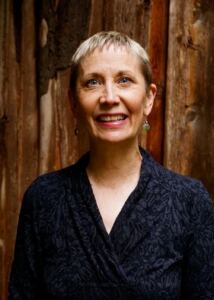 Becci Parsons is a Guild Certified Feldenkrais Teacher® and dancer with over 45 years of experience in the movement arts. She teaches community Awareness Through Movement classes and workshops while maintaining a private practice in Seattle. Becci also leads study groups and mentoring programs for local practitioners. She was a part-time faculty in the Dance Department at Cornish College of the Arts for 24 years and has served as guest faculty at the University of Washington and the University of Utah Somatics and Dance Conference. Her work is dedicated to the mindful exploration of human vitality, grace and elegance through the study of “self in motion.”
Becci’s Website: www.becciparsons.com