
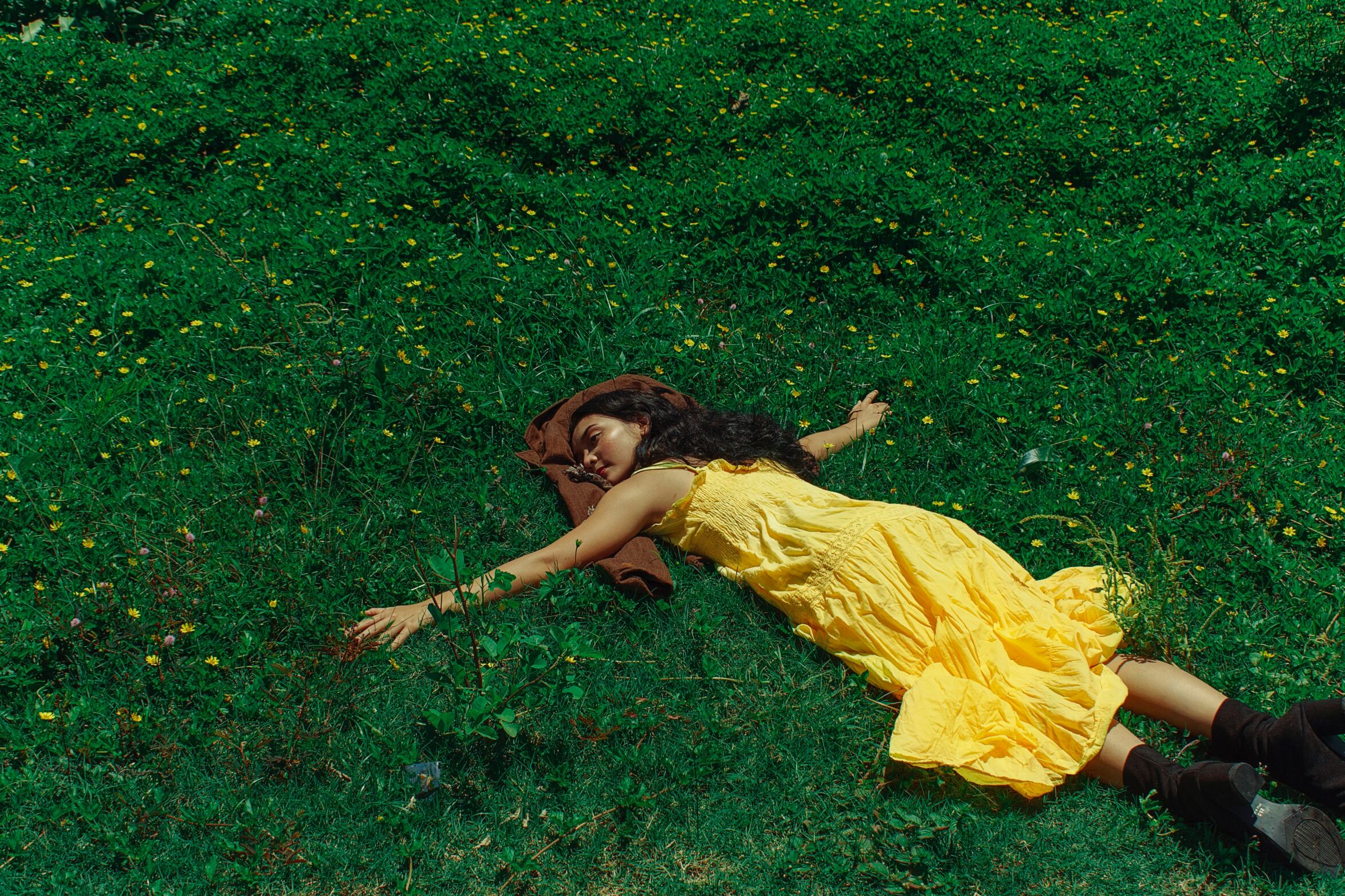
Think back to being a child—falling over was just part of the fun! Yet, as we mature, the act of falling becomes increasingly perilous and is often accompanied by significant fear.
We’ve gathered a collection of stories and anecdotes from our global community of Feldenkrais practitioners to highlight a simple truth: falling is a universal human experience. Through these shared moments, we hope to show that while the fear of falling is common, it doesn’t have to be permanent.
The Feldenkrais Method of Somatic Education offers practical, accessible tools to help anyone regain their balance, rebuild their confidence, and move through the world with greater ease.
Pia Thörngren
www.feldenkraismetoden.org/pedagog/pia-thorngren
The early morning of my second day of the four year Feldenkrais training, I was awakened by falling out of bed, landing on the floor on my replaced hip joint after hitting my head in the bedstand. I started laughing out loud, thinking this was sooo crazy. The oddest thing is that I did not hurt myself at all. Standing up, nothing was bruised or aching. I have never fallen out of bed neither before nor since that one time! (I have fallen other times though with both less and just as fortunate outcomes..)
Madeleine Edgar
http://www.marvellousmovement.com/
I almost fell while playing tennis! My hands were going down to the ground but suddenly my legs took over and ran me back up! I burst out laughing! Another time I was walking along a grass path looking into peoples’ lovely gardens, tripped over a piece of wire, fell forward & rolled over & stood up! I was in my 60s then! Feldenkrais certainly helps balance & ease falls!
Christine Germain
When I worked in the Dance Medicine Department at St-Francis Memorial Hospital in San Francisco, I had a 91-year-old client who kept falling and was having difficulty with balance. He had been a ballroom dancer, especially in tango.
So one day, as he came in, his wife mentioned he had fallen once again and how he was losing his balance a lot. Knowing how he loved dance, I invited him to come to the dance floor area we had in the department (just a few steps away from where I welcomed him) and asked him if he could teach me tango. Knowing the power of the mind in the Feldenkrais Method, I was curious how he would respond. He walked slowly and unsure, the way he usually walked in the room to meet with me or the physical therapists around. Once on the dance floor, taking my hand, he became a whole new person. He embodied the dancer he once was, and shifted his weight, taught me a few dance steps, and you couldn’t have thought he had any balance issues at all. It was a magic moment. So I told him and his wife that he had to remind himself how he moves when he dances. We still worked on stability and organization through Feldenkrais and Pilates, but I have such a fond memory of this absolutely magical moment.
Daniela Picard
https://danielapicard1951.wixsite.com/danielapicard
In the first years of my practice, I have heard a lot about falling and about the art of falling. Somehow, I wasn’t sure that falling art was my thing but I prepared myself and other people for rolling and getting up from the floor and getting to the floor and controlled falling and so on.
But still, I was not happy with the art of falling because I didn’t think that when you feel like falling on the street, you can really roll the fall…. There are circumstances in which it is not really a good idea to roll to the floor if in danger of falling.
But one day, as I was near to fall, stumbling over something on the street, I realised that I saved myself just by going on, like making the next step. For me it was an important discovery that if my mind is clear and my knowledge about movement together with my reflexes work well, I just can automatically find a next step which will take me out of the dangerous zone.
So I began to observe what happens when I am in a situation where one step is not sure enough: you can observe it on the street, in the mountain, in nature in general.
So I observed the art of continuing walking and finding the next step in a way which was really intelligent, an intelligence I didn’t know that I had.
It was really a pleasure to know that I can organise a step forwards or backwards to the left, to the right, something which will allow me to continue my walking without endangering myself and without rolling over which for example, when going the steps up or down would be a very bad idea.
Becoming conscious about this possibility was a source of joy. Yes, real joy.
And then, one day something happened in my life and my attention was somewhere else and I was not so really present but more busy with feelings which were not the ones I would like to have again. And then, suddenly, it happened. I stumbled over something and fell in a terrible way. It took some weeks to recover from this fall.
It was not as if I didn’t know how to continue the next step but it was a fact that I was not present, I cared more about my mobile phone than about myself and had this feeling of missing clarity, presence and as a consequence hindering the body to do what it knows to do the best.
So I understood a very important thing, that the art of falling, interesting enough, was an important art but more important was for me not to let my thoughts and my suffering take over. I should have cleared “my head” and opened my eyes and ears and everything that keeps me alert.
And practically thinking for the reader: don’t use your phone on the street.
You are much more important than your phone, immensely more important.
Michelle Poston
https://www.instagram.com/movement.by.michelle
In addition to being a Feldenkrais practitioner, I’m also a dance performer. For years there was one move I avoided: the Turkish Drop. It felt too risky, and I assumed it was something you learn when you’re younger, not later.
Then I started my Feldenkrais training.
As my awareness and confidence changed, I began revisiting movements I’d ruled out. I didn’t train the drop directly. Instead, I worked on pieces of it, spiraling to the floor, getting out of a W-sit without using my hands, finding easier transitions. Over time, those pieces added up.
I didn’t learn it until after I was 40, which still feels worth saying out loud. And earlier this year, when I tripped on the sidewalk, I discovered an unexpected side benefit: I fell without panic and got up without drama. All that time spent learning how to fall with intention showed up exactly when it mattered.
Turns out, learning to fall fancy has very practical uses.
Suzanne DeStefano
After stripping a stall, I was in a hurry. I tripped over the doorway entrance at speed. Should have face-planted, but quickly slapped both arms flat into the stall mat/concrete surface. I discovered later it is a martial arts move. No training other than my Feldenkrais professional training.
Unloading 55 bales of hay off my pickup truck on my asphalt driveway. Bales are roped on and also tied together with baling twine. I was about 10-12 feet above the ground. Forgot to pull a piece of baling twine free of its neighbor. I fell off. I thought to myself, “this isn’t going to end well!” I landed the best I could describe on all fours. No injury at first. Three days later after walking for four hours my foot became painful. I couldn’t walk. Crawled into my house. Best I could say a ligament must have dislodged. It easily went back in place and I was fine.
Jane Johnston
https://fitoverfortyvirginia.com
Whenever I am on the floor, all 3 of my dogs come and check on me. They come in and out , as long as I am down. They do not know if I fell or if I got on the floor on purpose, they just know that I am not usually in that position. Even though I get on the floor almost daily, the dogs always seem surprised, much as we are when we fall. When I get up from the floor, they are much relieved and go back to enjoying their day.
We all fall at some point in our lives and as we get older we tend to fall more often. I tend to get dizzy/woozy when I turn my head too fast and that has contributed to several falls. But what is important is that we know how to safely and easily get up off of the floor – whether after a fall or after getting purposefully on the floor.
Being able to get up from the floor easily brings confidence in walking and reduces the worry of falling. Worrying about taking a fall, leads to stiffer movement and less coordination in walking which increases the risk of falling.